

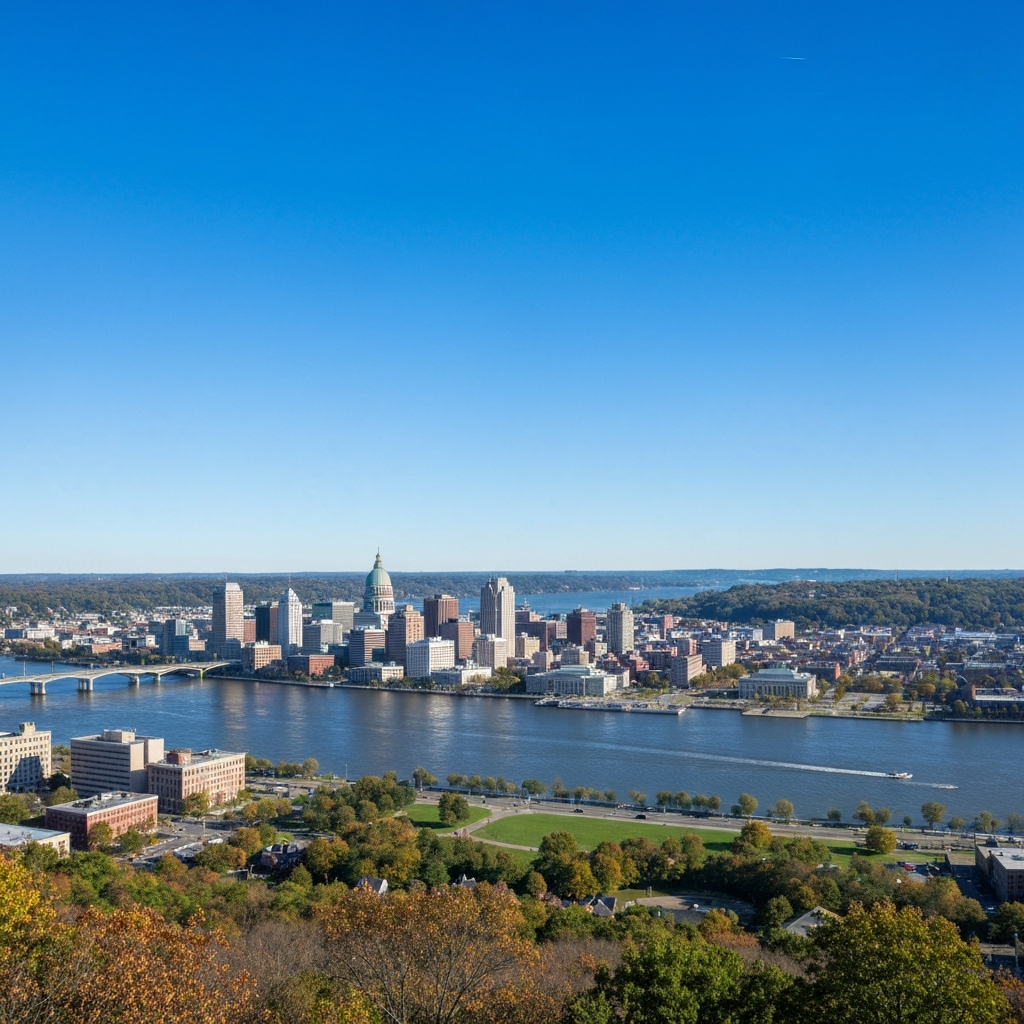
Albany, New York, experiences a humid continental climate characterized by four distinct seasons: cold, snowy winters; warm, humid summers; and transitional periods in spring and autumn. This climate is influenced by Albany’s geographical position along the Hudson River and its proximity to the Atlantic Ocean.
Winter
Winters in Albany are typically cold and snowy. Average low temperatures in January hover around 16.6°F (-8.6°C), with average highs reaching 32.7°F (0.4°C). The city receives approximately 59.4 inches (151 cm) of snowfall annually, with the heaviest accumulation occurring between December and February. These conditions are influenced by Albany’s inland location and occasional Nor’easters that bring significant snowfall.
Spring
Spring brings a gradual warming trend. By April, average high temperatures reach 58.6°F (14.8°C), and lows are around 37.6°F (3.1°C). This season is marked by increasing daylight and blooming flora, making it a pleasant time for outdoor activities.
Summer
Summers are warm and humid, with July being the hottest month. Average high temperatures in July are around 83.1°F (28.4°C), and lows are approximately 62.8°F (17.1°C). The city receives about 4.92 inches (125 mm) of precipitation in July, making it one of the wettest months.
Autumn
Autumn is characterized by cooler temperatures and vibrant foliage. By October, average high temperatures drop to 61.3°F (16.3°C), and lows are around 42.2°F (5.7°C). This season is also relatively wet, with October receiving about 3.86 inches (98 mm) of precipitation.
Environmental Considerations
Albany’s climate and geography contribute to certain environmental challenges. For instance, the city’s South End neighborhood has been the focus of studies examining air pollution due to its proximity to major transportation and industrial corridors. Efforts are underway to monitor and mitigate pollution levels in this area.
Understanding Albany’s climate is essential for residents and visitors alike, as it influences daily life, seasonal activities, and environmental planning in the region.