

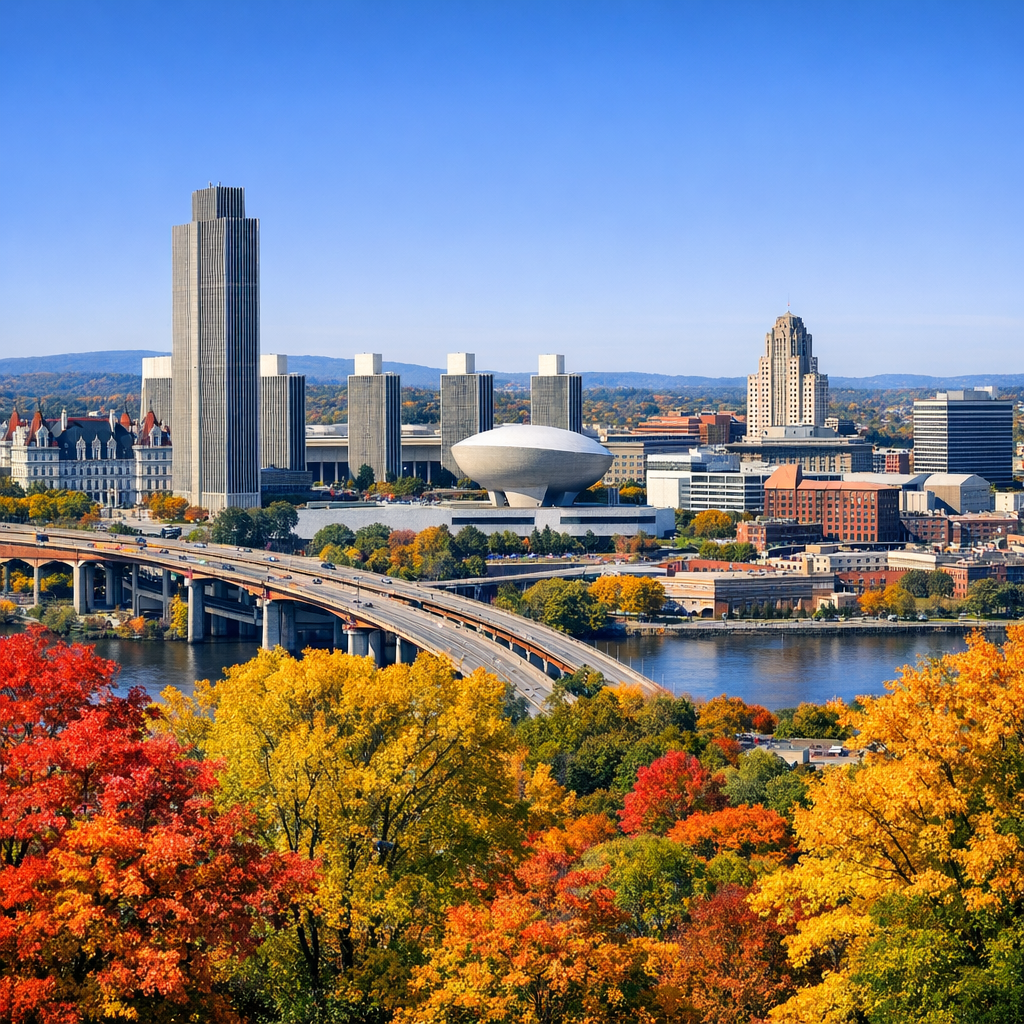
Albany, New York, experiences a humid continental climate characterized by four distinct seasons: cold, snowy winters; warm, wet summers; and transitional periods in spring and fall.
Winter
Winters in Albany are typically cold, with average low temperatures around 16°F (-9°C) and highs near 32°F (0°C). Snowfall is common, contributing to the city’s picturesque winter landscape.
Spring
Spring brings a gradual warming, with average highs reaching 58°F (14°C) by April. This season is marked by increasing daylight and blooming flora, making it a favorite for many residents.
Summer
Summers are warm and humid, with average highs around 83°F (28°C) in July. Precipitation is frequent, often in the form of thunderstorms, contributing to the lush greenery of the region.
Fall
Autumn is characterized by cooler temperatures and vibrant foliage. Average highs in October are around 61°F (16°C), providing comfortable conditions for outdoor activities.
Climate Change Impacts
Recent studies indicate that Albany is experiencing the effects of climate change, including increased average temperatures and more frequent extreme weather events. Projections suggest that by the 2050s, the region could see temperature increases of 4.5 to 6.4°F (2.5 to 3.5°C), leading to hotter summers and milder winters. Additionally, precipitation patterns are expected to shift, with more rainfall in winter and potential droughts in summer, increasing the risk of flooding and impacting local ecosystems.
Understanding these patterns is crucial for residents and policymakers to adapt and prepare for the evolving climate in Albany.