

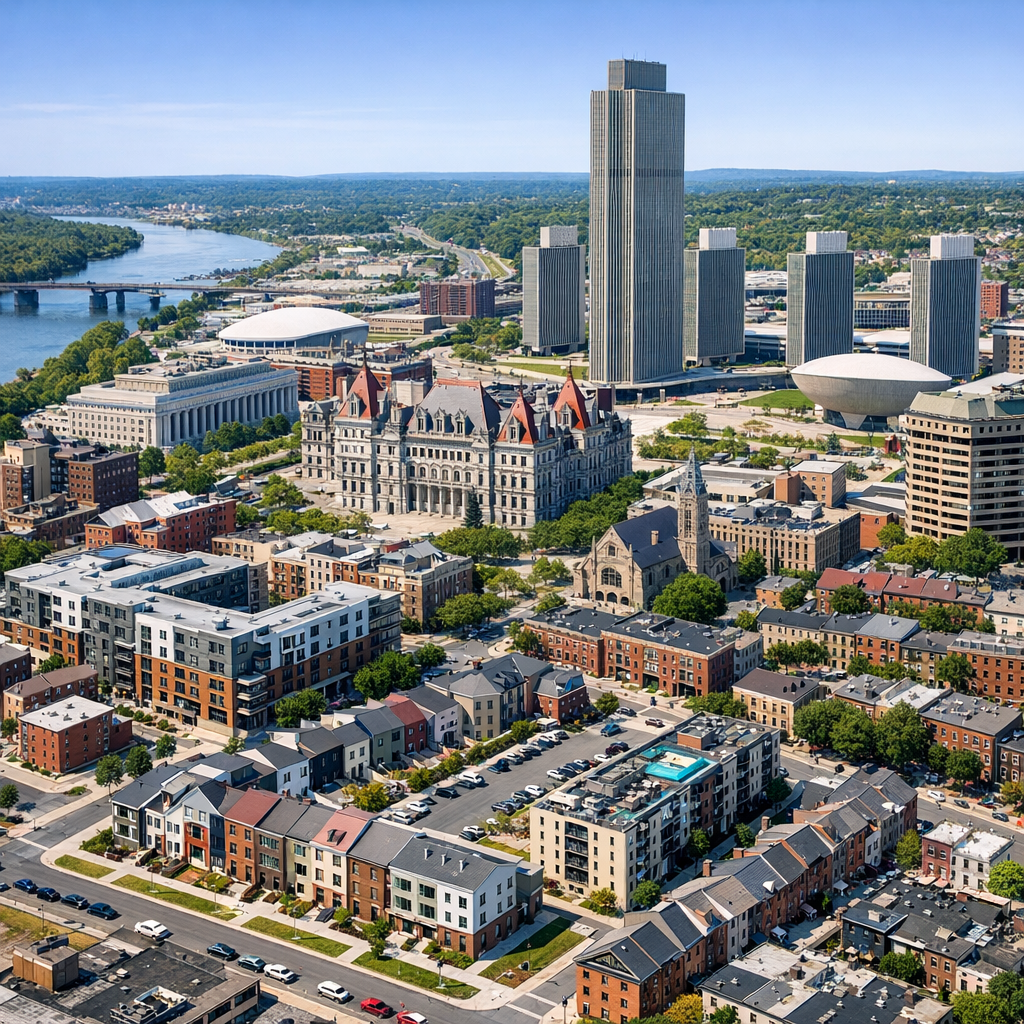
Albany’s housing market is experiencing notable shifts, influenced by market dynamics, development initiatives, and policy reforms. Understanding these changes is crucial for residents, prospective homebuyers, and investors.
Current Market Trends
As of early 2026, Albany’s housing market remains competitive. The median sale price of homes stands at $261,000, reflecting a slight decrease of 0.56% compared to the previous year. Homes are selling faster, with an average of 17 days on the market, down from 19 days last year. However, the number of homes sold has decreased by 9.23%, indicating a tightening inventory. [1]
Despite elevated mortgage rates, home values have remained resilient. Factors such as limited inventory, steady local employment, and growing demand from buyers priced out of larger metropolitan areas contribute to this stability. [2]
Affordable Housing Developments
To address housing affordability, several projects are underway:
- 97 Central Avenue Redevelopment: An $18 million project transforming the historic Selfridge & Langford Building into 49 affordable apartments with ground-floor commercial space. This initiative aims to revitalize a key corridor into downtown Albany. [3]
- South End Housing Project: The Albany County Land Bank, in partnership with Novus Living and MDG Design + Construction, is developing over 160 affordable housing units in the historic South End. Site work and foundation laying are progressing, with completion anticipated in the near future. [4]
- North Gate Landing: Conifer Realty has secured financing for a 185-unit affordable housing development on the former Red Carpet Inn site. The project will offer a mix of one, two, and three-bedroom units for families earning between 50% and 80% of the Area Median Income. [5]
Policy Reforms and Future Outlook
In April 2026, Mayor Dorcey L. Applyrs signed an Inclusionary Zoning amendment into law. This reform aims to unlock new housing development across Albany by balancing the need for market-rate housing with affordability requirements. The policy is expected to stimulate growth and attract investment while maintaining a commitment to affordable housing. [6]
Looking ahead, Albany’s housing market is poised for continued evolution. Ongoing development projects and policy reforms are set to shape the city’s real estate landscape, offering opportunities and challenges for all stakeholders.
Staying informed about these developments is essential for navigating Albany’s dynamic housing market effectively.