

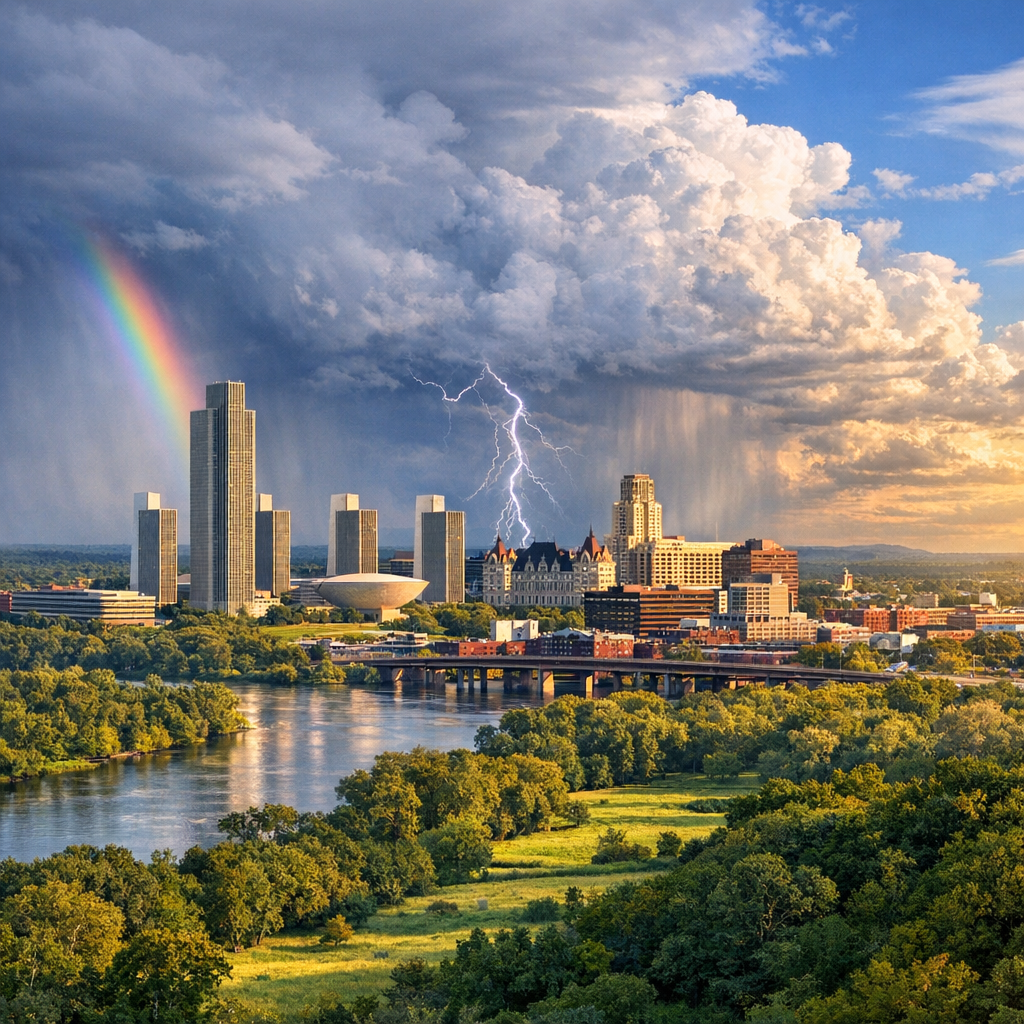
Albany’s weather has long been marked by four distinct seasons: snowy, frigid winters; humid, warm summers; blossoming springs; and colorful autumns. But the norms are shifting. As climate change accelerates, Albany faces changes that affect daily life, public health, and the landscapes we call home.
How the Climate Is Already Changing in Albany
Recent analyses by Albany County health and sustainability agencies outline several trends underway locally:
- Hotter summers: Days with highs over 95°F were rare historically, but projections suggest they’ll become much more common by mid-century. Longer heat spells mean more cooling costs, increased health risks, especially for vulnerable communities.
- Milder, wetter winters: Snowfall may decline in favor of rain, even during months that traditionally bring heavy snow. The frequency of extreme winter precipitation—snowstorms or ice storms—could still spike sporadically.
- Heavier rainstorms and rising flood risks: More rainfall overall and more intense downpours are raising concerns about flooding, especially along the Hudson, and overwhelming old infrastructure.
- Longer allergy seasons, more pests: Mild winters and shifting precipitation patterns favor pollen, ticks, mosquitoes, and invasive species—pressures that affect health and ecosystems.
What Albany’s Averages Tell Us
Climate normals gathered over 1991–2020 offer a baseline for what used to be “typical”:
- Summer highs are around 84°F in July, while January nights average close to 16°F.
- Total annual precipitation hovers near 41 inches, with July often being the wettest month.
- Snow totals average about 59 inches per season.
These numbers remain useful, but extremes are growing more common—and they’re reshaping what “normal” feels like here.
Risks to Community, Ecosystems, and Health
The changing climate hits different sectors in different ways:
- Public Health: Heat-related illness, asthma exacerbations, vector‐borne diseases, and mental stress from extreme conditions. Planning includes cooling centers, health alerts, and community outreach.
- Infrastructure: Roads, storm sewers, and utilities built for past climate norms may struggle with more frequent heavy precipitation and heat loads.
- Natural Spaces: Parks, forested areas like the Pine Bush Preserve, streams, and wetlands face shifting species ranges, invasive organisms, and altered water regimes.
- Equity and Vulnerable Populations: Lower-income neighborhoods often bear the brunt of heat islands, flood-prone areas, and have fewer resources to adapt.
What Albany Is Doing—and What You Can Do
The city and county have launched multiple strategies to meet these challenges head‐on:
- Sustainability Initiatives: Through Albany’s Office of Energy & Sustainability and various city departments, programs include energy efficiency, green infrastructure, renewable energy, and community engagement.
- Climate Action Planning: The “Act Now Albany” plan (rollout expected in summer 2026) sets greenhouse gas reduction targets, assesses vulnerability, and proposes adaptation strategies.
- Health Protection: Public advisories, cooling centers, vector control, and programs aimed at reducing exposure to extreme heat and air quality issues.
As residents, there are things you can do:
- Support local green building measures and efficient retrofits.
- Plant trees, especially shade varieties, to cool neighborhoods.
- Reduce water runoff by using rain gardens, permeable surfaces, and minimizing impervious cover.
- Stay informed about weather alerts, air quality warnings, and city programs.
Albany will continue to change—but understanding what’s happening, why it matters, and how we can adapt helps the city become more resilient. That’s where real environmental protection begins.