

Albany, New York, experiences a diverse range of weather conditions throughout the year, characterized by four distinct seasons. Understanding these patterns is essential for residents and visitors alike.
Winter
Winters in Albany are typically cold and snowy. Average temperatures in January, the coldest month, range from lows of 16°F to highs of 32°F. Snowfall is common, with the city receiving significant accumulation during these months.
Spring
Spring brings a gradual warming trend. By May, average high temperatures reach around 67.6°F. This season also sees increased rainfall, contributing to the lush greenery that defines the region.
Summer
Summers are warm and humid, with July being the hottest month. Average highs in July are around 82°F, and the city experiences its highest precipitation during this period, averaging 4.77 inches.
Autumn
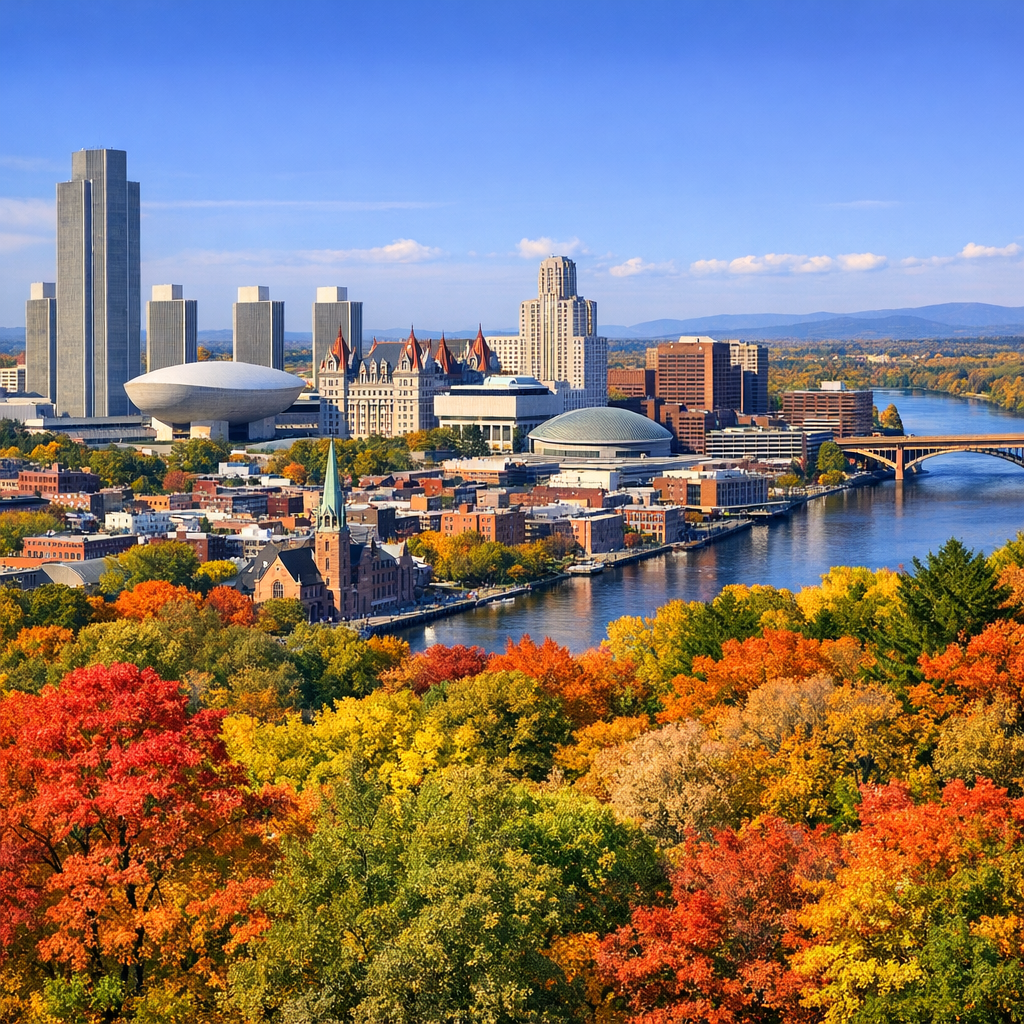
Autumn is marked by cooler temperatures and vibrant foliage. By November, average highs drop to 48°F. Rainfall during this season averages around 2.88 inches.
Climate Change Impacts
Recent studies indicate that Albany is experiencing the effects of climate change, including increased average temperatures and more frequent extreme weather events. Projections suggest that by the 2050s, the region could see temperature increases of 4.5 to 6.4 degrees Fahrenheit.
In response, the City of Albany has initiated several sustainability efforts, such as switching to 100% renewable energy for municipal operations and installing electric vehicle chargers across the city.
Understanding Albany’s climate patterns and the ongoing changes is crucial for planning and adapting to ensure the well-being of the community.