

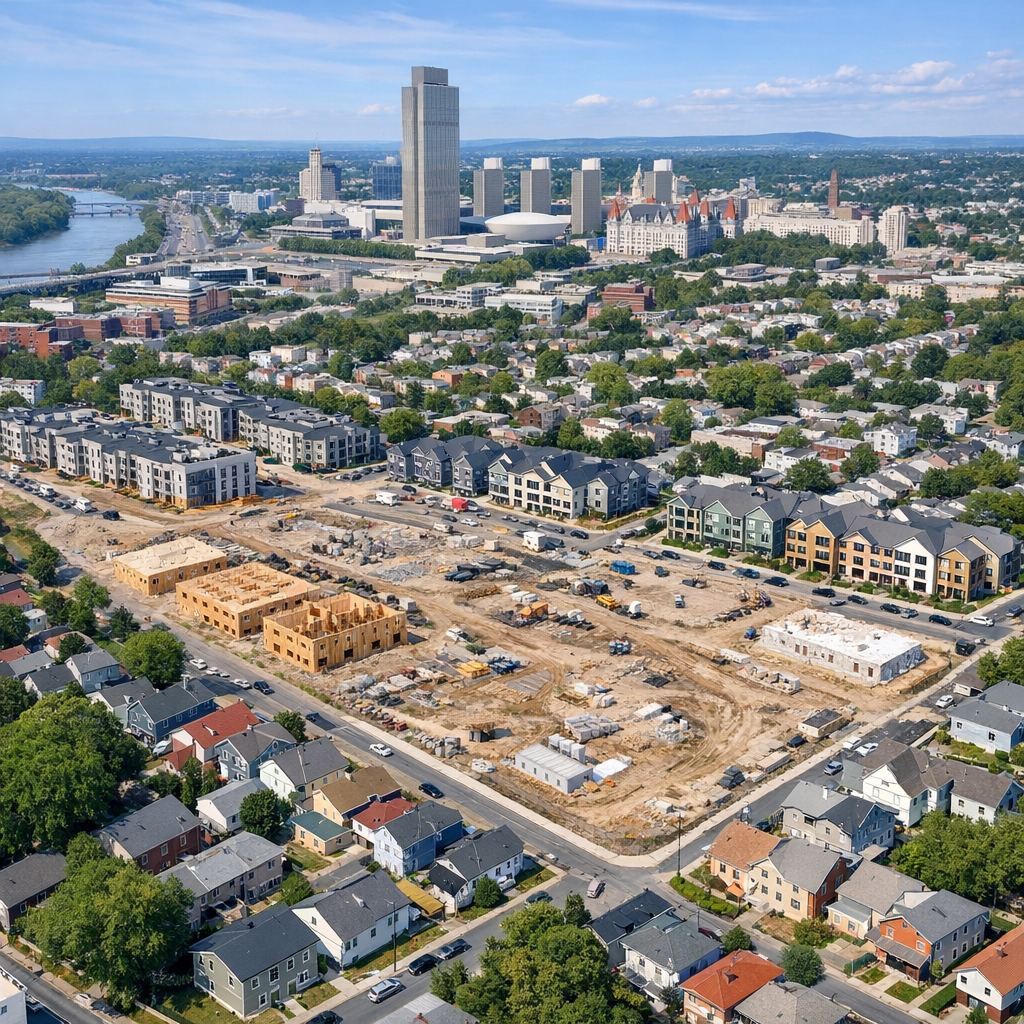
Albany’s housing market is experiencing notable shifts, influenced by recent development projects and policy reforms aimed at addressing affordability and supply challenges.
Current Market Trends
As of March 2026, the median sale price for homes in Albany stands at $261,000, reflecting a slight decrease of 0.55% compared to the previous year. Homes are selling faster, with an average of 17 days on the market, down from 20 days last year. However, the number of homes sold has declined by 10.9%, with 57 homes sold in March 2026 compared to 64 in the same month last year. Source
In contrast, Albany County has seen a 10% increase in median sale prices, reaching $340,000. Homes in the county are selling after an average of 18 days on the market, slightly longer than the previous year. Source
Development Initiatives
Several development projects are underway to enhance housing availability and affordability in Albany:
- 97 Central Avenue Redevelopment: The historic Selfridge & Langford Building is being transformed into 49 affordable apartments with ground-floor commercial space, revitalizing a key corridor into downtown Albany. Source
- South End Housing Project: The Albany County Land Bank, in partnership with Novus Living and MDG Design + Construction, is developing over 160 affordable housing units in the South End. Site work and foundation laying are progressing, with updates available through the Land Bank’s project page. Source
Policy Reforms
To stimulate housing development, Mayor Dorcey Applyrs signed an Inclusionary Zoning amendment into law in April 2026. This reform aims to increase housing supply by attracting new investment while maintaining a commitment to affordability. Source
Additionally, the City of Albany is updating its five-year Consolidated Plan for 2025-2029. This plan will guide investments in housing, homelessness services, economic development, and public infrastructure, ensuring that federal funding aligns with community needs. Source
These developments and policy changes reflect Albany’s proactive approach to addressing housing challenges and fostering a more inclusive and dynamic real estate market.